
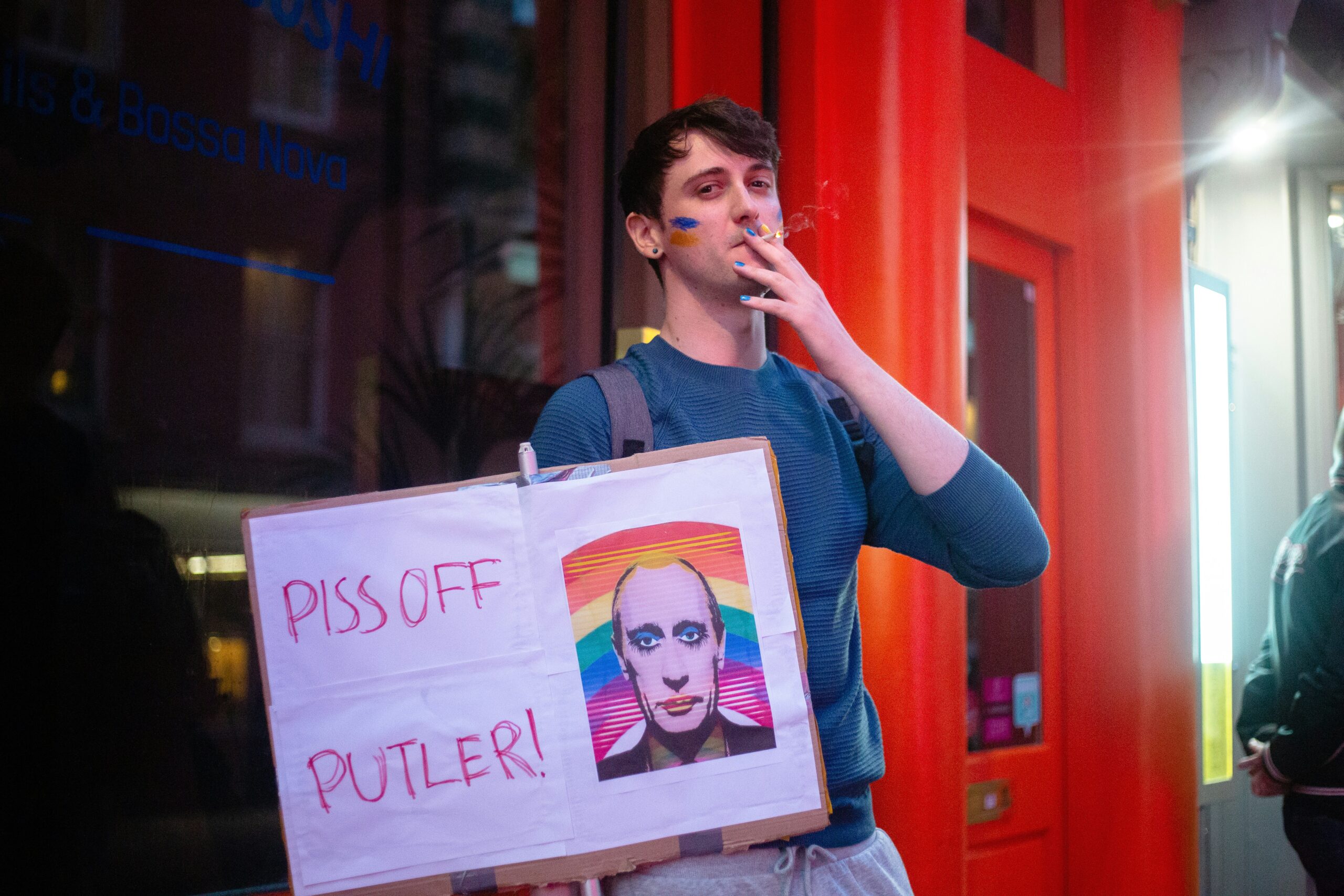
Photo by Karollyne Videira Hubert on Unsplash
The queer experience is never monolithic. It shifts depending on geography, family, faith, politics, and culture. In Poland, this reality is made visible through contemporary cinema, where filmmakers grapple with questions of identity, secrecy, and survival. Two films in particular—Operation Hyacinth (2021, dir. Piotr Domalewski) and In the Name Of (2013, dir. Małgorzata Szumowska)—offer powerful but very different depictions of queer life in Poland.
Both films center on closeted men—Robert, a police officer in urban Warsaw during the 1980s, and Adam, a Catholic priest in rural Poland. Yet their environments and roles in society shape their experiences in distinct ways, illuminating how place, politics, and institutions contour the possibilities (and limits) of queer life.
Urban Poland: Queerness under Surveillance
In Operation Hyacinth, Robert works as a secret police officer during “Operation Hyacinth,” a real campaign in which the communist state surveilled, registered, and harassed queer men. His professional role forces him to police the very community he begins to feel connected to.
Warsaw, as Poland’s capital, provides both opportunities and dangers for queer connection. The “Mushroom,” a public toilet where men meet in secret, becomes a symbol of hidden intimacy. But this visibility comes at a cost: Robert must overcompensate in his heterosexual performance—maintaining a fiancée, appeasing his parents, and hiding his desire for his lover, Arek.
Masculinity is under constant negotiation. For Robert, masculinity is measured by professional loyalty and heterosexual appearances. To be anything less is to invite suspicion, surveillance, and punishment.
Rural Poland: Queerness and the Church
In the Name Of shifts to rural Poland, where Father Adam attempts to escape his homosexuality by burying himself in the priesthood. Assigned to work with troubled boys, Adam quickly realizes that his vows and his desires are in conflict. His connection with one boy, Łukasz, destabilizes the careful façade he’s built.
Unlike Warsaw’s bustling underground networks, Adam’s world is one of isolation, religious scrutiny, and suffocating silence. Here, queerness is not criminalized by the state but by the Catholic Church, which remains one of Poland’s most powerful institutions. Homosexuality is framed as incompatible with “tradition” and faith, leaving Adam torn between authenticity and duty.
Masculinity in this setting is policed less by formal structures and more by peer culture and religion. The boys Adam mentors fight to prove their toughness, revealing how deeply queerness is stigmatized as feminine or weak. Adam himself embodies restraint, channeling his desires into drinking when repression becomes unbearable.
Careers, Coping, and Contradictions
What makes both stories so compelling is how Robert and Adam’s professions embody irony: Robert hunts queer men while secretly longing for intimacy with them, and Adam preaches salvation while battling his own desires. Each man creates coping mechanisms—Robert by reopening the Hyacinth cases as a way of repairing harm, Adam by prescribing “running” as an outlet for the boys (until he succumbs to alcohol himself).
Both men also balance dual relationships: one that maintains appearances and another that allows for secret intimacy. For Robert, it’s Halinka versus Arek; for Adam, it’s God versus Łukasz. These parallel dynamics underline how queerness is forced into duplicity under oppressive social structures.
Family and Final Choices
Family responses also shape these men’s trajectories. Robert’s parents are overbearing, his father pushing him to remain “straight” and respectable, while Adam’s mother dismisses his confession of queerness outright. These moments highlight generational tensions in Poland’s treatment of LGBTQ+ people.
Their endings diverge: Robert’s fate remains ambiguous, left in a haze of sirens and separation, while Adam leaves the priesthood to embrace his identity—only for Łukasz to join the Church, repeating the very cycle Adam fought to escape.
Why These Stories Matter
Taken together, these films paint a layered portrait of queer life in Poland—shaped by both geography (rural vs. urban) and by institutions (the state vs. the Church). Both Robert and Adam reveal the suffocating secrecy, shame, and social policing that queer people endure. But they also embody resilience, intimacy, and the ongoing fight for authenticity.
As Polish cinema continues to evolve, these narratives remind us of the progress still needed—not only in representation on screen but in real-world acceptance of queer lives.
Leave a Reply