
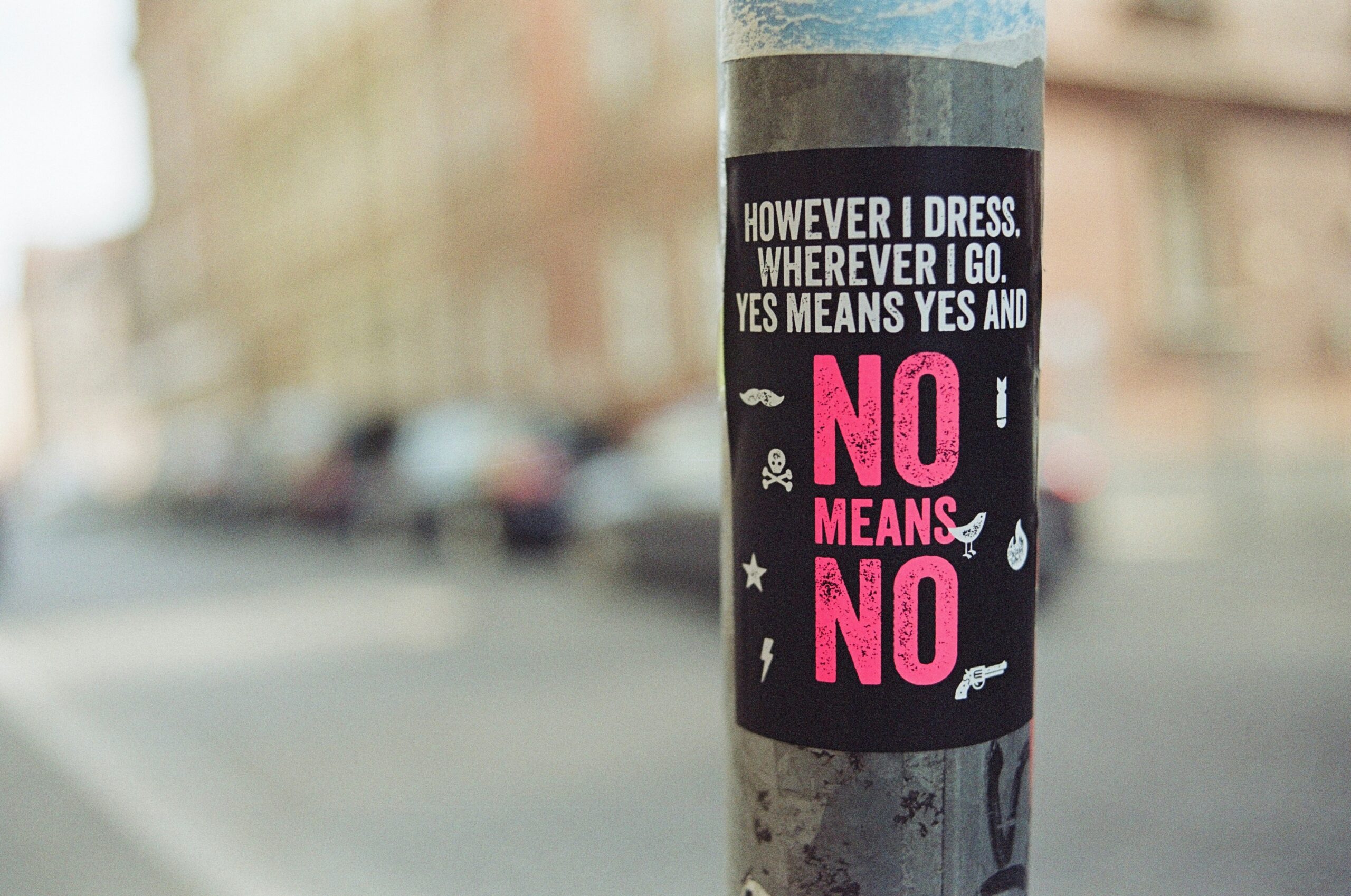
Photo by Markus Spiske on Unsplash
Trauma doesn’t always begin with one moment.
Sometimes it begins with the way institutions respond — or don’t.
For me, one of the most disturbing realizations has been watching how adults treated my sexual harassment in childhood versus how it was handled in adulthood.
And the difference is terrifying.
When I Was a Child, Adults Took It Seriously
When I was sexually harassed in elementary school:
• the police were contacted
• the school stepped in immediately
• discipline happened
• I was sent to counseling
The message was clear:
This matters.
You deserve safety.
This behavior is unacceptable.
There was no debating whether it was “bad enough.”
No minimizing.
No waiting for escalation.
The harm itself was enough.
When I Was an Adult, Nothing Happened
Years later, when I was sexually harassed at Canisius University, the response was the opposite.
I reported exactly what happened.
I was harassed.
Threatened.
And a man filmed up my skirt.
The response?
He would be “spoken to.”
But nothing could be done unless he physically touched me.
Let that sink in.
Apparently, Trauma Only Counts After Assault
According to institutional logic:
✔ filming under a woman’s clothes = not enough
✔ threats = not enough
✔ ongoing harassment = not enough
✔ fear = not enough
✔ violation = not enough
Only physical assault would trigger real action.
So the system doesn’t prevent harm.
It waits for it to get worse.
This Is How Institutions Enable Violence
When schools and workplaces respond this way, they send three messages:
- Harassment is tolerable
- Survivors must endure escalation to be believed
- Men aren’t accountable until extreme harm occurs
This is not protection.
This is risk management.
They aren’t asking:
“How do we keep women safe?”
They’re asking:
“How much can happen before we’re legally responsible?”
The Psychological Toll: PTSD Doesn’t Wait for Assault
Here’s what many people don’t understand:
PTSD doesn’t require rape.
Trauma doesn’t require bruises.
Fear rewires the brain long before physical violence happens.
Being stalked.
Being threatened.
Being watched.
Being sexualized.
Being violated through images.
All of this creates:
• hypervigilance
• anxiety
• panic responses
• loss of safety in everyday spaces
• intrusive memories
• emotional shutdown
The body reacts as if danger is constant — because it was.
Why This Hits Women So Hard
Women are taught from childhood:
• be polite
• don’t overreact
• don’t cause trouble
• don’t ruin his life
• don’t make it awkward
So when harassment happens, many of us already doubt ourselves.
Then institutions reinforce that doubt by saying:
“It’s not serious enough yet.”
Which translates to:
Your fear is inconvenient.
Your trauma isn’t actionable.
Your safety is negotiable.
The Escalation Myth
There’s a dangerous belief that harassment is harmless unless it turns physical.
But research and survivor experiences consistently show:
Harassment is often the first step — not a separate issue.
Most violent offenders start with:
• testing boundaries
• escalating behavior
• seeing what they can get away with
• relying on institutional silence
When nothing happens early, it teaches perpetrators they’re safe to continue.
Childhood vs Adulthood: The Cruel Irony
As a child, I was protected.
As a grown woman, I was told to wait until it got worse.
Why?
Because institutions often care more about liability than safety.
Children are seen as vulnerable and worthy of protection.
Women are seen as risks to manage.
This Is Why So Many Women Don’t Report
Not because it didn’t matter.
Because reporting often leads to:
• being dismissed
• being minimized
• being retraumatized
• no consequences
• more danger
Silence becomes self-preservation.
A Feminist Truth: Prevention Is Justice
Justice isn’t responding after violence.
Justice is stopping it before it escalates.
That means:
• believing survivors immediately
• treating harassment as serious harm
• removing perpetrators early
• prioritizing safety over reputation
• understanding trauma as real even without physical assault
Make It Make Sense? It Doesn’t — And That’s the Problem
There is no logic where filming up a woman’s skirt isn’t dangerous.
There is no world where threats aren’t trauma.
There is no system that claims to protect students while waiting for assault.
What exists instead is patriarchy dressed as policy.
Why I’m Talking About This Now
Because silence protects perpetrators.
Because so many women share this exact story.
Because PTSD doesn’t care what a Title IX office considers “serious enough.”
Because harassment is violence — even before hands are involved.
And because we deserve systems that intervene before harm becomes irreversible.
Final Thought
When institutions wait for assault, they are not neutral.
They are complicit.
Every ignored report is permission.
Every minimized experience is training.
Every “not enough yet” is how trauma multiplies.
Women don’t need to be hurt worse to be believed.
We need to be protected the first time we speak.
Leave a Reply